Top Dredge Pump Manufacturers WL Series Slurry Pump Guide
When managing low-density slurries in mining or metallurgical operations, the efficiency of fluid transport directly impacts operational uptime and maintenance costs. The AIER® WL series light-duty slurry pumps are specifically engineered as cantilevered, horizontal centrifugal units to address these challenges. By integrating wear-resistant metal liners and versatile sealing options, these pumps provide a streamlined solution for transporting materials such as coarse sand, phosphate matrix, and mineral concentrates. For engineers and procurement specialists, selecting the right equipment means balancing volumetric capacity—ranging from 2.34 to 9108m³/h—with the specific abrasive nature of the medium to ensure long-term structural integrity and performance stability.

Engineering Design of Horizontal Centrifugal Slurry Pumps
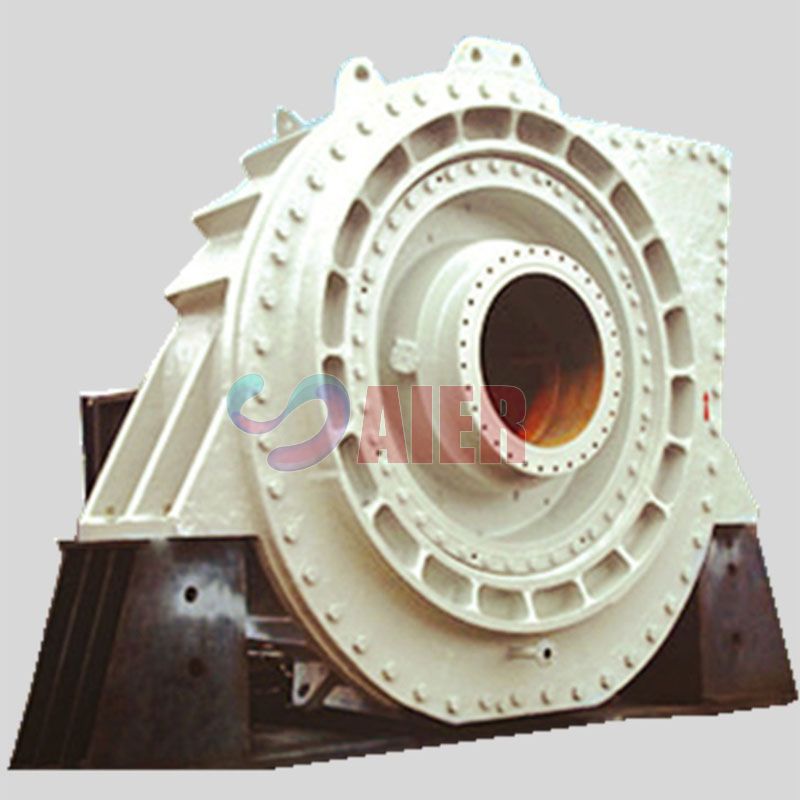
The WL Series utilizes a cantilevered design that minimizes vibration and deflection, which is critical when handling dense or abrasive fluids. The casing is constructed from split halves of cast or ductile iron, designed to house interchangeable liners. This modularity allows operators to switch between hard metal and moulded elastomer liners depending on the pH level and abrasive characteristics of the slurry. The impeller, available in both elastomer and hard metal, features deep side sealing vanes that effectively relieve seal pressure and minimize internal recirculation, thereby increasing the overall hydraulic efficiency.
To ensure operational versatility, the discharge branch can be positioned at 45-degree intervals, allowing the pump to be oriented in any of eight positions. This flexibility simplifies installation within tight plant layouts. Furthermore, the transmission module supports various drive modes, including V-belt, flexible coupling, gearbox, and variable frequency drives. Among these, the flexible shaft coupling and V-belt drives are frequently recommended due to their low installation costs and ease of maintenance, making them ideal for rapid deployment in mining sites.

Advanced Material Selection for Extreme Wear Environments
Material science is the cornerstone of pump longevity in the slurry industry. The WL series offers a comprehensive range of alloys and polymers tailored to specific chemical and physical environments. For high-wear conditions with a pH between 5 and 12, the AB27 chrome white iron (23%-30% Cr) is the primary choice. In more aggressive acidic environments, such as Flue Gas Desulfurization (FGD) or low-sour conditions (pH ≥ 4), the AB29 alloy is utilized to prevent premature corrosion and erosion.
Beyond metals, the use of rubber and polyurethane liners provides superior resistance to impact and fine-particle abrasion. The shaft sleeves and lantern rings are manufactured from high-grade stainless steels (4Cr13, 304 SS, or 316 SS) to protect the core shaft from corrosive attack. By matching the material specification to the specific slurry chemistry—whether it be phosphoric acid, nitric acid, or heavy media—operators can significantly extend the mean time between failures (MTBF) and reduce the frequency of costly liner replacements.
Critical Applications in Mining and Metallurgical Processing
The versatility of the WL series makes it suitable for a vast array of industrial applications where fluid density is relatively low but abrasive potential is high. In the mining sector, these pumps are essential for SAG mill discharge, ball mill discharge, and rod mill discharge. They are also widely deployed for transporting coarse tailings, mineral sands, and oil sands, where consistent flow rates are necessary to prevent pipe clogging and sedimentation.
In chemical and power plant operations, the series excels in FGD (Flue Gas Desulfurization) processes and the transport of phosphoric acid. The ability to handle process chemicals and wastewater makes them valuable for pulp and paper mills and slag granulation plants. Because these pumps operate at high speeds with relatively small footprints, they are often the preferred choice for cyclone feeds and plant water supply systems where floor space is at a premium but high pressure (up to 250psi) is required.
Material Application and pH Suitability Matrix
| Material Grade | Composition | Recommended pH Range | Primary Application |
|---|---|---|---|
| AB27 | 23%-30% Chrome Iron | pH 5 - 12 | High wear/General Slurry |
| AB29 | 27%-29% Chrome Iron | pH ≥ 4 | FGD / Low-sour condition |
| AB33 | 33%-37% Chrome Iron | pH ≥ 1 | Phosphor-plaster / Nitric Acid |
| Rubber | Moulded Elastomer | Application-dependent | Fine tailings / Impact wear |
| Stainless Steel | 304/316 SS | Corrosive fluids | Shaft sleeves / Lantern rings |
Selecting the Optimal Sealing and Drive Configuration
Sealing is the most vulnerable point in any slurry pump. The WL series provides three distinct options to ensure leakage control based on the fluid's nature. Packing seals are traditional and reliable for general use, while centrifugal seals are utilized to reduce the load on the packing and extend its life. For applications where liquid dilution is strictly prohibited, the GRG type mechanical seal is implemented, utilizing high-hardness ceramics and alloys to provide a shake-proof, high-abrasion-resistant barrier.
From a procurement perspective, the drive system selection should align with the energy efficiency goals of the plant. While V-belt drives offer the simplest installation, variable frequency drives (VFD) allow for precise control over the pump's speed, which is vital when the slurry density fluctuates. This prevents the pump from running dry or overloading the motor, ensuring that the head (4-60m) and capacity are optimized for the current operational load.
Quality Assurance in Slurry Pump Manufacturing
Reliability in heavy-duty pumping depends on the precision of the bearing assembly and the robustness of the pump base. The WL series utilizes large-diameter shafts with short overhangs to minimize deflection and vibration, which are the primary causes of premature bearing failure. These heavy-duty roller bearings are housed in removable cartridges, allowing for rapid replacement without dismantling the entire pump unit.
Aier Machinery emphasizes a "People-oriented, Scientific Management" approach to production, focusing on the detail of every cast component. By adhering to strict quality controls for chrome white iron casting and precision machining of the split casing, the manufacturer ensures that the mating faces are tapered for positive alignment during assembly. This attention to detail ensures that the pump maintains its pressure capabilities (up to 250psi) even under the most rigorous industrial conditions.
Technical FAQ for Slurry Pump Selection
What is the difference between the WL series and heavy-duty slurry pumps?
The WL series is designed as a light-duty pump, specifically for low-density slurries. It operates at higher speeds with a smaller volumetric footprint to save floor area compared to heavy-duty units, making it ideal for metallurgical and building material departments.
How do I choose between a metal liner and a rubber liner?
Metal liners (like AB27 or AB33) are preferred for high-temperature, high-pH, or highly abrasive coarse particles. Rubber liners are generally better for finer particles and specific chemical environments where impact resistance is more critical than hardness.
Can the WL series handle highly acidic fluids like nitric acid?
Yes, provided the AB33 (33%-37% chrome white iron) material is selected. This specific alloy is designed for oxygenated slurries with pH levels as low as 1, suitable for nitric acid and phosphoric acid applications.
What are the advantages of the centrifugal seal in these pumps?
The centrifugal seal helps reduce the pressure at the stuffing box by creating a pressure barrier, which significantly reduces the wear on the packing materials and decreases the amount of flush water required.
Which drive mode is most cost-effective for initial installation?
The flexible shaft coupling and V-belt drive modes are the most cost-effective options due to their simple mechanical structure and ease of installation in most industrial environments.
How does the cantilevered design benefit pump maintenance?
The cantilevered shaft minimizes the number of bearings in contact with the slurry and reduces deflection, which leads to less frequent seal failures and easier access for impeller replacement.
Technical Industry Resources
- ISO Standards for Centrifugal Pump Testing
- ASME B73.1 Standard for Chemical Process Pumps
- Mining Technology - Slurry Handling Guides
- Industrial Pumping System Design Fundamentals
Selecting a high-performance slurry pump requires a deep understanding of material chemistry and hydraulic requirements. For companies seeking reliable dredge pump manufacturers, the focus should remain on the synergy between material hardness, seal integrity, and manufacturing precision to ensure minimal downtime in critical mining operations.
Related Engineering Insights