Premium Wholesale High Head Slurry Pump for Mining Dredging
When managing heavy-duty mining or marine reclamation projects, the efficiency of transporting abrasive materials over significant distances depends entirely on the pump's ability to maintain high pressure without premature wear. Selecting a high-performance dredging system requires a balance between flow capacity and head pressure to ensure solids are moved effectively without clogging the pipeline. For industrial buyers, the challenge lies in finding equipment that can handle a wide range of slurry concentrations while minimizing operational downtime.
The AIER® WN series provides a professional-grade solution for these demanding environments. By utilizing advanced centrifugal designs and high-chrome alloy components, these pumps are engineered to handle particle sizes up to 350mm and concentrations up to 70%. Whether you are executing deep-water dredging or land reclamation, understanding the technical intersection of NPSH and hydraulic efficiency is key to reducing energy costs and extending the equipment's service life.

Engineering Analysis of the AIER® WN Series Dredge Pump Construction
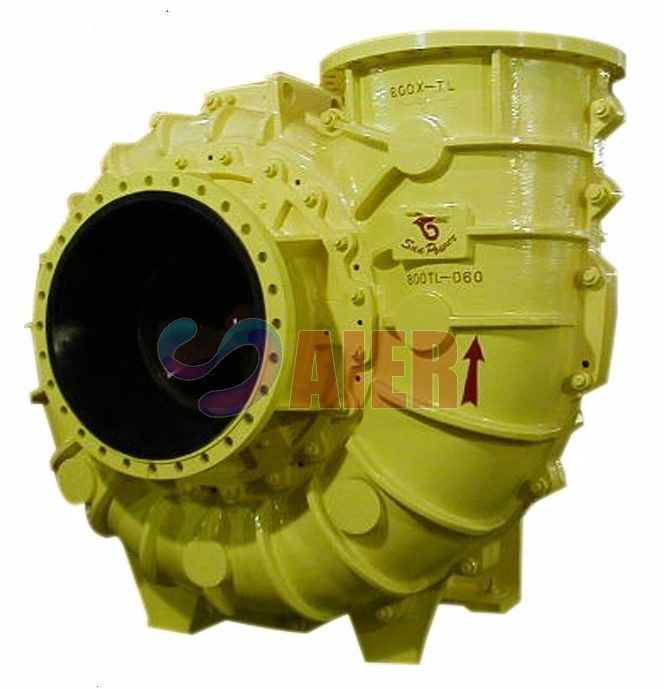
The construction of the WN series is divided into two primary architectural categories to match different scale requirements. The 200WN to 500WN models feature a single casing, single-stage cantilevered horizontal centrifugal design. These are optimized for agility and ease of installation, offering two coupling options with gearboxes: the frame type and the pump box type, allowing users to adapt the drive system to their specific power source.
For larger scale operations, the 600WN to 1000WN models utilize a double-casing design. This engineering choice is critical for longevity; the double casing ensures that the pump remains operational and leak-free even as the volute liner wears down. These larger units are equipped with frame-based lubrication using force thin oil, providing superior thermal management and friction reduction under continuous heavy-duty loads.
- Front Uninstallation: The modular construction allows for quick access to internal parts, significantly reducing maintenance windows.
- Trapezoid Thread Connection: A standard four-head trapezoid thread connects the impeller and shaft, capable of transferring massive torsion forces.
- Impeller Ease: An uninstall ring at the shaft sleeve side simplifies the removal of the impeller during liner replacements.

Maximizing Hydraulic Performance and Energy Efficiency in Slurry Transport
Hydraulic loss is one of the primary drivers of operational cost in dredging. The WN series is engineered to achieve an efficiency rate 2% to 3% higher than common industry alternatives. This is achieved through an optimized internal flow path that reduces turbulence and friction. By adjusting the impeller diameter or rotating speed, operators can precisely calibrate the discharge flow rate to match the specific requirements of the pipeline distance.
A critical technical advantage is the pump's NPSH (Net Positive Suction Head) performance. With a minimum NPSH of 4m, these pumps can maintain deep suction without cavitation, allowing for higher allowable suction density. This ensures that high-plastic clay or gravel can be moved continuously without the risk of clogging, thanks to the wide impeller passage designed for particles up to 350mm.
To prevent leakage and protect the motor, a tiered sealing system is employed. Smaller models utilize mechanical seals or packing combinations, while the 600WN to 1000WN models use a specialized helical casing L rubber seal. This seal consists of three L-seal rings and a special thread shaft sleeve, ensuring a robust barrier against abrasive slurry ingress.
Strategic Material Selection for Extreme Wear Environments
In dredging, the "wet parts" are subject to relentless abrasion from sand, gravel, and mineral slurries. Aier Machinery utilizes high-chrome white iron for the impeller, volute, and liners. This material is selected for its extreme hardness and resistance to erosive wear. Through precision casting, the company ensures uniform hardness across the component, preventing localized "pitting" that often leads to premature pump failure.
For clients operating in saltwater or chemically aggressive environments, the material palette extends to stainless steel and duplex alloys. These options provide the necessary corrosion resistance to prevent oxidation while maintaining the structural integrity required for high-head pumping. A key philosophy in the WN series design is "matched wear life," where all wear-resistant parts are engineered to degrade at similar rates, reducing the frequency of partial replacements and simplifying the interchange cost.
Furthermore, the integration of elastomer liners helps dissipate the impact energy of large particles, acting as a cushion that protects the primary metal casing. This hybrid approach to material engineering maximizes the interval between maintenance cycles and ensures that the pump can operate in the world's toughest dredging conditions.
Technical Specifications and Performance Matrix
| Parameter | Small Range (200-500WN) | Large Range (600-1000WN) | Max Capability |
|---|---|---|---|
| Discharge Size | 8" to 20" | 24" to 40" | 40" |
| Flow Capacity | 600 - 8,000 m3/hr | 8,001 - 25,000 m3/hr | 25,000 m3/hr |
| Delivery Head | 20 - 50 m | 51 - 86 m | 86 m |
| Max Particle Size | Up to 200mm | Up to 350mm | 350mm |
| Concentration | 0% - 70% | 0% - 70% | 70% |
Buyer's Guide: Selecting the Right Dredging Equipment
Procuring a wholesale high head slurry pump requires a detailed assessment of the site's geological and hydraulic conditions. The first step is identifying the material being dredged. Fine sand requires different impeller geometries than coarse gravel; while sand focuses on flow volume, gravel requires wider passages and higher impact resistance to avoid clogging.
Distance and depth are the next critical factors. The total dynamic head (TDH) must be calculated by adding the static lift to the friction losses of the discharge pipeline. A pump with an insufficient head will fail to move the slurry to the reclamation site, while an oversized pump will waste energy and accelerate wear. Aier Machinery provides customized design support to ensure the motor power and pump capacity are perfectly matched to the project's specific pipeline length.
Finally, consider the "Total Cost of Ownership" (TCO) rather than just the initial purchase price. A pump made from inferior alloys may be cheaper upfront but will require frequent liner replacements and cause costly operational shutdowns. Investing in high-chrome alloy construction and modular designs ensures that maintenance is fast and parts last longer, lowering the long-term cost per cubic meter of material moved.
Operational Integration and Maintenance Best Practices
To achieve maximum efficiency, the dredging process must be carefully controlled. The operation begins by submerging the suction inlet into the sand bed, where the centrifugal force creates a negative pressure zone to draw the mixture. To avoid cavitation, operators should monitor the slurry density—if the concentration becomes too high, the flow may stall, leading to "plugging" of the pipeline.
Regular maintenance is the only way to guarantee long-term reliability. The focus should be on the three critical points: the impeller, the volute liner, and the shaft seal. Using the specialized tools provided with the WN series, technicians can perform front-end disassembly without moving the entire pump housing. This modular approach is essential for continuous operations in harbor maintenance or land reclamation projects.
Looking forward, the trend in slurry pumping is moving toward variable frequency drives (VFDs). By integrating a VFD with an AIER® pump, operators can adjust the RPM in real-time based on the slurry density, significantly reducing energy consumption and wear during periods of lower material concentration.
Frequently Asked Questions on Industrial Slurry Pumps
What is the main difference between single and double casing dredge pumps?
Single casing pumps are typically smaller and more compact, ideal for light to medium dredging. Double casing pumps, like the AIER 600WN-1000WN, provide an extra layer of protection, allowing the pump to operate safely and without leakage even after the internal volute liner has been significantly worn down by abrasive materials.
How does the material choice affect the lifespan of a slurry pump?
High-chrome white iron is used for its extreme hardness, which resists the abrasive action of sand and gravel. For corrosive environments like seawater, stainless steel or duplex alloys are used. Choosing the wrong material can lead to rapid erosion or chemical corrosion, drastically increasing maintenance frequency.
What happens if the slurry concentration exceeds 70%?
Exceeding the recommended concentration can lead to high friction losses in the pipeline and may cause the pump to "plug" or clog. This increases the load on the motor and can lead to cavitation or mechanical failure. It is important to maintain a balance between solids and water for optimal transport.
Can these pumps handle large rocks or debris?
The WN series is designed with wide impeller passages. Depending on the model, they can handle particles up to 350mm. However, the size of the suction pipe and the discharge pipeline must also be large enough to accommodate these particles to prevent blockages.
Why is NPSH important when selecting a dredge pump?
NPSH (Net Positive Suction Head) determines the pump's ability to lift fluid from a depth without the liquid boiling or forming bubbles (cavitation). A lower minimum NPSH, such as the 4m offered by AIER, allows for deeper dredging and higher suction density without damaging the impeller.
How often should the wear parts be replaced?
Replacement intervals depend on the abrasiveness of the material and the operating hours. Because AIER designs parts with matched wear lives, the impeller and liner usually need replacement at similar times, which simplifies the maintenance schedule and reduces downtime.
Technical References and Industry Standards
- ISO Standards for Centrifugal Pump Testing
- Hydraulic Institute Pump Design Guidelines
- ASTM Material Specifications for High Chrome Iron
- Environmental Guidelines for Marine Dredging Operations
Whether you are managing a large-scale sand mining project or maintaining critical harbor infrastructure, the right pumping solution is the foundation of your operational success. By focusing on material integrity, hydraulic efficiency, and ease of maintenance, you can ensure high productivity and lower long-term costs.
Explore Related Dredging Solutions