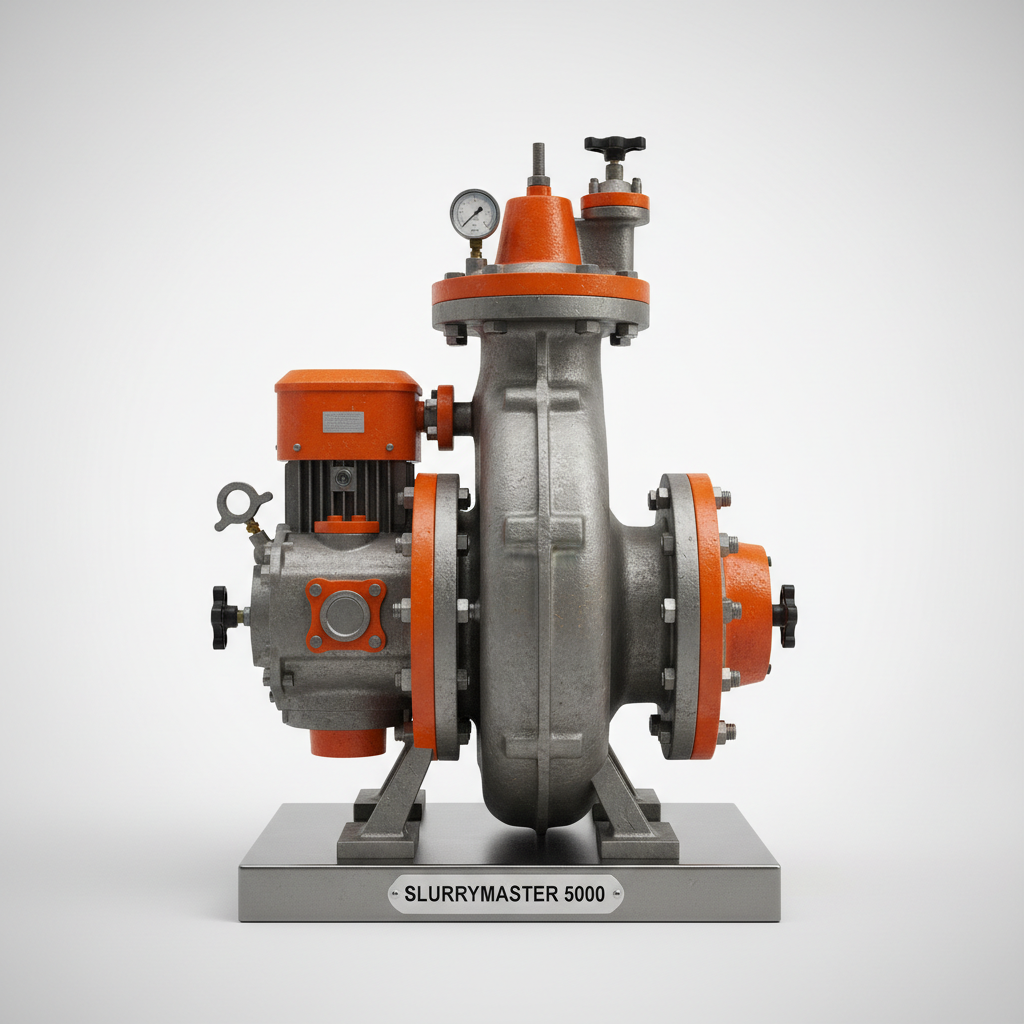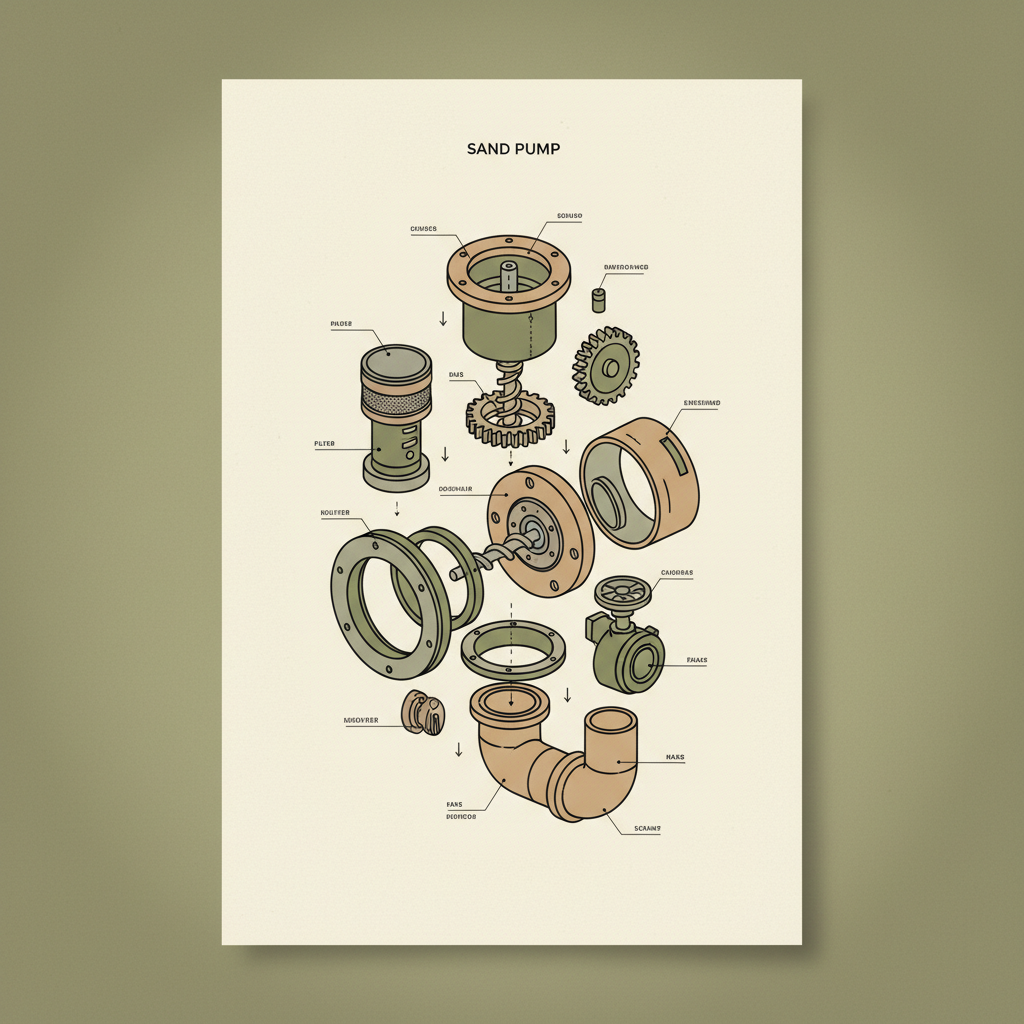
Selecting the right equipment for abrasive fluid transport often leads operators to search for reliable slurry pump manufacturers in usa to ensure domestic support and adherence to regional industrial standards. However, the true challenge lies not just in the location of the manufacturer, but in the metallurgical composition and hydraulic design of the pump components.
The operational lifespan of a slurry pump is predominantly decided by how the impeller and casing resist the relentless erosion of suspended solids. From high-chrome alloys to specialized rubber linings, the choice of material must align precisely with the chemical nature and particle size of the medium being moved.
Understanding these technical nuances allows procurement managers to look beyond geography and evaluate slurry pump manufacturers in usa and global alternatives based on total cost of ownership and mean time between failures (MTBF).


Slurry pumping is fundamentally different from clean water transport. The fluid is a non-Newtonian mixture where suspended solids create a highly abrasive environment. The primary objective is to maintain a velocity high enough to prevent particles from settling (critical settling velocity) while minimizing the velocity at the pump walls to reduce erosion.
This delicate balance requires precision engineering of the pump's internal geometry. If the velocity is too low, the pump plugs; if it is too high, the equipment wears out prematurely. The interaction between the rotating impeller and the stationary volute determines the overall efficiency and lifespan of the system.
The impeller serves as the heart of the slurry pump, acting as the rotating body that transmits kinetic energy to the liquid. Modern designs utilize curved vanes to optimize flow and reduce turbulence, which is a primary driver of localized wear. For instance, the E4147 series impeller is specifically engineered for models like the 6/4D-AH, focusing on maintaining hydraulic stability even under heavy solid loads.
Beyond the vanes, the wheel disc and the attachment method play vital roles in structural integrity. A slight misalignment in the impeller's rotation can lead to uneven wear on the liner, causing catastrophic failure of the pump casing. Therefore, precise casting and machining are non-negotiable requirements for high-performance components.
Engineering firms now focus on "adaptive" impeller designs. Depending on the slurry density, different vane profiles—ranging from open to semi-closed—are employed to prevent clogging while maximizing the head produced per revolution.
Material science is the primary defense against erosion. In most heavy-duty mining and industrial applications, High Chrome Alloy (such as A05) is the standard for impellers and liners due to its exceptional hardness and resistance to abrasive particles.
The effectiveness of a slurry pump is not determined by the pump's initial flow rate, but by the rate of material loss per thousand hours of operation. Material hardness must be balanced with toughness to prevent cracking under impact.
While high-chrome alloys excel in abrasive environments, rubber-lined pumps are often preferred for finer particles or corrosive slurries. The elastic nature of rubber allows the liner to "absorb" the impact of particles, making it an ideal choice for specific FGD (Flue Gas Desulfurization) or sewage applications.
Evaluating a pump's performance requires looking at more than just the datasheet. Operators must consider the Wear Life Index, the Energy Efficiency Ratio under load, and the ease of maintenance. A pump that is 5% more efficient but requires twice as many impeller replacements is a liability in a 24/7 mining operation.
By analyzing the relative suitability of different materials against various slurry types, we can establish a qualitative scoring model to guide equipment selection.
In a typical industrial setting, such as a dredging project or a mineral processing plant, the requirements vary wildly. For dredging, the focus is on high flow rates and the ability to handle large particles, necessitating the use of heavy-duty Gravel Sand Pumps. Conversely, in an FGD plant, the pump must withstand both abrasion and chemical corrosion, making Ceramic or specialized Solution Pumps the primary choice.
Maintenance teams often struggle with the downtime associated with impeller replacement. This is where the standardization of parts—such as the AH or L series codes—becomes critical. Having interchangeable spare parts that suit established models like the Warman series allows for rapid turnaround and reduced operational risk.
The landscape of pump manufacturing is shifting from local exclusivity to globalized quality standards. While many firms still search for slurry pump manufacturers in usa for proximity, the integration of global supply chains has brought high-precision casting from international hubs into the domestic market.
Aier Machinery Hebei Co., Ltd., founded in 2005, exemplifies this trend. By specializing in the production of slurry, dredge, and FGD pumps, they have aligned their manufacturing processes with worldwide requirements, focusing on a "People-oriented, Scientific Management" approach to reduce product imperfection.
The current direction of the industry is toward "Smart Wear Monitoring," where sensors embedded in the pump casing can predict impeller failure before it occurs, transitioning the industry from reactive to predictive maintenance.
Choosing between different pump configurations requires a structured trade-off analysis. The decision usually boils down to the balance between initial capital expenditure (CAPEX) and long-term operational expenditure (OPEX), primarily driven by wear-part replacement frequency.
When comparing options, the "Material vs. Particle" matrix is the most reliable tool. High-chrome alloys are indispensable for coarse, hard minerals, whereas rubber is superior for fine, sandy slurries. Ignoring this distinction often leads to premature equipment failure regardless of the manufacturer's reputation.
The following framework provides a relative suitability guide for different pump types based on common industrial requirements.
| Application Type | Recommended Material | Wear Resistance | Typical Component |
|---|---|---|---|
| Hard Rock Mining | High Chrome Alloy | Exceptional | E4147 Impeller |
| Fine Sand Dredging | Natural Rubber | High (Elastic) | Rubber Liner |
| Chemical Slurry | Ceramic/Alloy | Moderate/Corrosion Res. | Ceramic Pump |
| Sewage/Wastewater | Cast Iron/Steel | Low to Moderate | Sewage Pump |
| Mineral Tailings | Mixed Chrome | High | Metal Slurry Pump |
| FGD Desulfurization | Specialty Alloy | Corrosion-Focus | FGD Pump |
Suitability is defined by the manufacturer's ability to match metallurgical properties with the specific abrasive characteristics of the fluid. A capable manufacturer doesn't just provide a pump but offers a range of materials—from High Chrome Alloy A05 to specialized rubber—and can provide interchangeable parts for industry-standard models like the AH or L series to ensure minimal downtime.
The choice depends on particle size and hardness. High-chrome alloys are essential for coarse, jagged, and hard particles (e.g., mining tailings) because they resist surface scratching and erosion. Rubber is preferred for fine particles and sandy slurries, as the material's elasticity allows it to deflect particles, resulting in a longer lifespan for a specific set of conditions.
Impeller codes (such as AH, L, or M) indicate the hydraulic design and the intended application of the rotating body. For example, different codes may signify a transition from a standard slurry design to a vertical slurry pump or a gravel-specific pump. Matching the correct code to your pump model (e.g., 6/4D-AH) ensures the pump maintains its designed efficiency and head pressure.
Standard pumps usually prioritize one or the other. However, specialized pumps like Ceramic Slurry Pumps or those utilizing specific alloy coatings are designed for dual-resistance. When procuring, it is critical to specify the pH level and the abrasive index of the slurry to ensure the manufacturer provides a material that won't dissolve chemically while being eroded physically.
Critical settling velocity is the minimum speed at which particles remain suspended in the fluid. If a pump's internal velocity drops below this threshold, solids will settle, causing blockages and rapid wear at the bottom of the casing. Selection must involve a hydraulic calculation to ensure the pump maintains the necessary flow velocity for the specific density of the slurry.
Domestic sourcing from slurry pump manufacturers in usa offers logistical advantages. However, global manufacturers often provide higher specialization in specific alloys or cost-effective OEM castings. The decision should be based on the availability of spare parts and the manufacturer's ability to adhere to the technical specifications of the operation rather than location alone.
The efficiency of an industrial slurry system is not a static value but a variable that decays with every hour of operation. To maximize the lifespan of the equipment, operators must move away from generic purchasing and toward a material-science-driven selection process.
Whether partnering with local slurry pump manufacturers in usa or utilizing the specialized production capabilities of firms like Aier Machinery, the focus must remain on the intersection of hydraulic efficiency and metallurgical endurance. By prioritizing precision in impeller design and material matching, industries can significantly reduce their operational downtime and total maintenance costs.