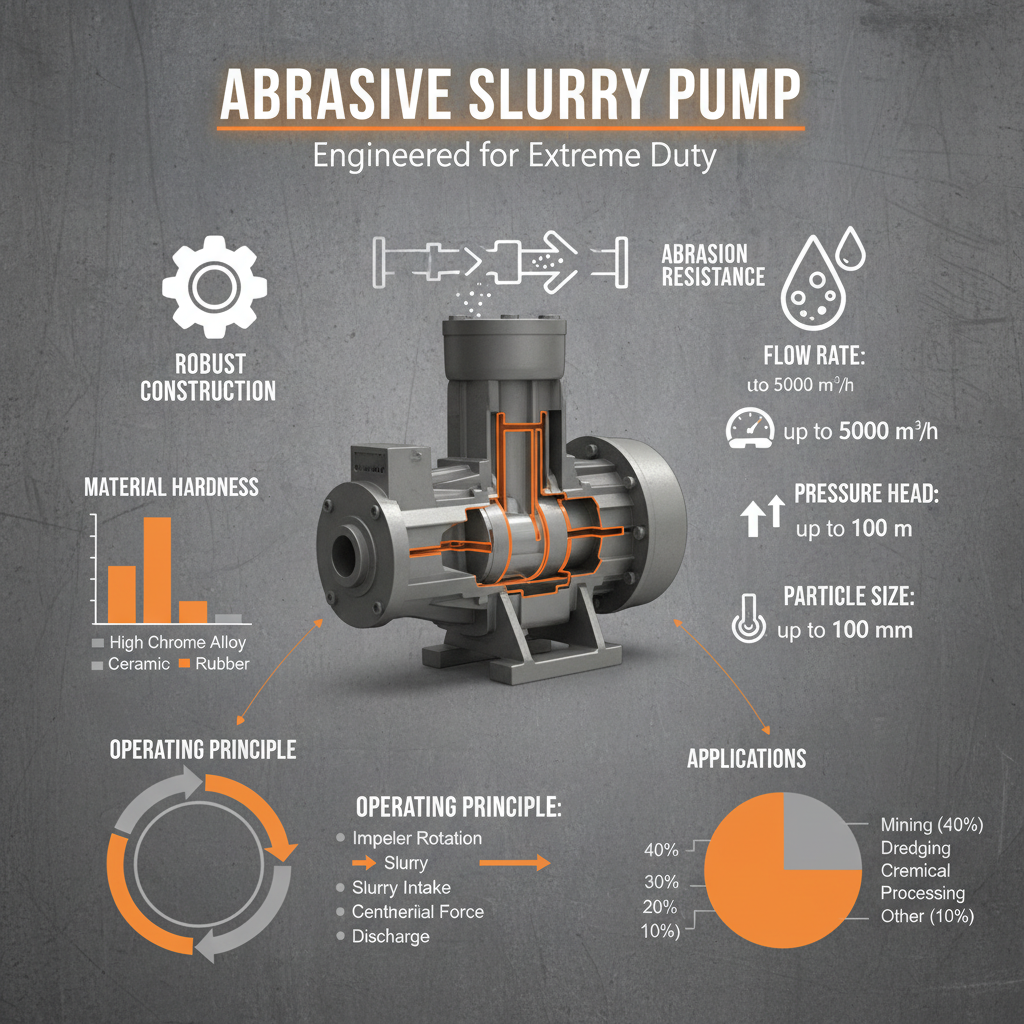
Selecting the right slurry pump factory is a critical decision for any industrial operation dealing with abrasive or corrosive fluids. These specialized facilities don't just manufacture hardware; they engineer solutions for the most punishing environments on earth, from deep-sea dredging to mineral processing plants. Understanding the nuances of pump construction and material science ensures that your operational downtime is minimized and your efficiency is maximized.
In a global economy driven by the demand for raw materials, the role of a professional slurry pump factory has evolved. Modern manufacturing now integrates advanced metallurgy and fluid dynamics to handle high-density solids that would destroy a standard water pump in hours. By focusing on the synergy between impeller design and liner materials, these factories provide the backbone for the mining, chemical, and environmental sectors.
The long-term value of partnering with a reputable slurry pump factory lies in the balance of initial investment and total cost of ownership. While low-cost alternatives exist, the expertise found in a dedicated factory—specifically in high-chrome alloys and rubber compounds—prevents catastrophic failures and reduces the frequency of expensive part replacements.
Global Context of Slurry Pump Manufacturing
The global demand for mineral extraction and wastewater management has placed an unprecedented burden on the infrastructure provided by the slurry pump factory. According to industry trends aligned with ISO standards for pump performance, the ability to transport high-viscosity fluids containing abrasive solids is no longer a niche requirement but a global industrial necessity. From the lithium mines of South America to the dredging projects in Southeast Asia, the efficiency of these pumps directly impacts the global supply chain of essential minerals.
However, the industry faces a persistent challenge: the rapid degradation of pump internals due to erosive wear. Traditional factories often struggled with the trade-off between hardness and toughness. Modern advancements in high-chromium white iron and specialized elastomers have allowed factories to push the boundaries of pump lifespan, ensuring that critical infrastructure remains operational even under the most extreme pH levels and particle concentrations.
Defining the Modern Slurry Pump Factory
At its core, a slurry pump factory is a specialized engineering hub dedicated to the design, casting, and assembly of pumps capable of moving "slurry"—a mixture of solids and liquids. Unlike standard water pumps, these facilities focus on "wear management." This means every aspect of the production line, from the foundry to the final test bench, is geared toward resisting the scouring action of particles like sand, gravel, or chemical precipitates.
These factories serve a vital humanitarian and industrial role by enabling the safe transport of tailings in mining, providing essential dredging for flood control, and supporting the FGD (Flue Gas Desulfurization) processes that clean power plant emissions. Without the precision engineering of a slurry pump factory, the cost of maintaining these environmental protections would be prohibitively high.
Modern facilities now integrate OEM casting capabilities, allowing them to produce custom wet ends—including impellers, volute liners, and throat bushes—tailored to the specific gravity and chemistry of a client's slurry. This customization ensures that the pump is not just a generic tool, but a precision instrument optimized for a specific industrial application.
Core Components of High-Performance Pumps
The durability of a pump produced by a leading slurry pump factory begins with its metallurgy. High-chromium alloys, such as A05 (23%-30% chrome white iron), are the gold standard for high-wear conditions, offering a hardness of ≥56 HRC. This material ensures that the impeller and liners can withstand the constant bombardment of abrasive particles without immediate structural failure.
Beyond metallurgy, the geometric design of the wet ends is paramount. A professional slurry pump factory optimizes the flow path to reduce turbulence, as high-velocity eddies are where the most significant wear occurs. By utilizing Computational Fluid Dynamics (CFD), engineers can place liners in high-impact zones and use rubber compounds like R26 or R55 for slurries with smaller, sharper particles that would otherwise "chip" a hard metal surface.
Finally, the support system—including the frame, bearing house, and shaft—must be equally robust. While the wet end takes the brunt of the abrasion, the mechanical integrity provided by ductile iron frames and stainless steel (316 SS) shafts ensures that the pump remains aligned. This holistic approach to construction is what separates a true industrial slurry pump factory from a general-purpose equipment manufacturer.
Global Applications and Industrial Use Cases
The versatility of equipment from a slurry pump factory allows it to be deployed across diverse global sectors. In the mining industry, specifically for gold and copper extraction, these pumps move thick tailings from the processing plant to storage facilities. In these environments, the ability to handle high-density solids is critical to preventing pipeline blockages and ensuring environmental containment.
Beyond mining, dredging operations in coastal regions rely on these pumps for land reclamation and harbor deepening. In post-disaster relief operations, submersible slurry pumps are often deployed to clear sediment-heavy floodwaters and debris from urban centers, proving that the output of a slurry pump factory is essential for both economic growth and emergency response.
Comparative Efficiency of Slurry Pump Factory Material Options
Tangible Advantages and Long-Term Value
Partnering with a specialized slurry pump factory provides immediate logical benefits in the form of reduced operational expenditure (OPEX). By utilizing precisely matched materials—such as AB33 for oxygenated slurries with low pH—companies avoid the "cycle of failure" where pumps are replaced every few months. This reliability translates directly into higher plant availability and more predictable maintenance schedules.
Beyond the numbers, there is an emotional and ethical value: safety and trust. A pump failure in a tailings dam or a chemical plant is not just a financial loss; it is a safety hazard. When a factory adheres to strict quality controls and provides certified OEM castings, it provides the operator with peace of mind, knowing that the equipment will not fail under pressure, thus protecting both the workforce and the surrounding environment.
Future Trends in Slurry Handling Technology
The next frontier for the slurry pump factory is the integration of "Intelligent Wear Monitoring." Using IoT sensors embedded in the pump casing, operators can now track the thinning of liners in real-time. This shifts the maintenance paradigm from reactive (fixing it when it breaks) to predictive, allowing for part replacement exactly when needed, further reducing downtime.
Sustainability is also driving innovation. We are seeing a move toward "green" casting processes and the development of bio-based elastomers that offer the same resilience as synthetic rubbers but with a lower carbon footprint. Factories are now focusing on energy-efficient impeller designs that move more volume with less kilowatt-per-ton of slurry.
Digital Twin technology is another game-changer. A slurry pump factory can now create a virtual replica of a pump's operation within a specific client's system. By simulating different slurry densities and flow rates, they can optimize the pump's performance virtually before a single piece of metal is cast, ensuring a perfect fit and maximum longevity from day one.
Overcoming Operational Challenges in Slurry Pumping
One of the most common challenges encountered by users of equipment from a slurry pump factory is "settling," where solids drop out of the suspension during low-flow periods, leading to catastrophic blockages. The solution lies in the implementation of variable frequency drives (VFDs) and the design of "anti-settling" impellers that maintain a minimum critical velocity even at reduced speeds.
Corrosion combined with abrasion—known as "corrosive wear"—is another hurdle. In FGD applications, for example, the slurry is not only abrasive but chemically aggressive. The expert approach here is the use of AB29 chrome white iron, specifically designed for lower pH conditions, which creates a protective oxide layer that shields the metal from acid attack while maintaining hardness.
Finally, the challenge of spare parts availability can paralyze an operation. The most successful slurry pump factories solve this by offering standardized "modular wet ends." This allows users to stock a few key components—like expeller rings and throat bushes—that are interchangeable across different pump sizes, streamlining inventory and speeding up repair times.
Comparison of Wear Material Applications by Slurry Type
| Slurry Environment |
Recommended Material |
Key Property |
Expected Life Index |
| High-Abrasive Sand |
High Chrome A05 |
Max Hardness (≥56 HRC) |
9/10 |
| FGD / Acidic Slurry |
Chrome Iron AB29 |
Low pH Resistance |
8/10 |
| Fine Silt / Soft Slurry |
Natural Rubber R26 |
Elastic Impact Absorption |
8/10 |
| Phosphate / Nitric Acid |
Chrome Iron AB33 |
Oxygenated Resistance |
7/10 |
| Corrosive Sea Water |
316 Stainless Steel |
Chloride Resistance |
6/10 |
| General Wastewater |
Ductile Iron D21 |
Structural Strength |
5/10 |
FAQS
The choice depends on particle size and impact. High chrome alloys from a slurry pump factory are best for large, sharp particles and high-pressure applications. Rubber liners are superior for fine, abrasive particles (like sand) where the material can "bounce back" from the impact, providing longer life in low-pressure, high-volume scenarios.
Lifespans vary wildly based on the slurry's concentration and velocity. However, using premium A05 High Chrome components can typically extend the interval between replacements by 30-50% compared to standard cast iron. Regular inspections every 3-6 months are recommended to prevent "burn-through" of the casing.
Yes. A professional factory will analyze your slurry's chemistry and offer specific alloys. For example, AB29 is used for FGD installations with pH levels as low as 4, while AB33 is suited for highly oxygenated slurries like phosphate or vitriol, ensuring the pump doesn't corrode from the inside out.
The most common indicators are a noticeable drop in discharge pressure, an increase in motor amperage (due to imbalance), and a decrease in the total volume of material being moved. Excessive vibration is also a red flag, indicating that the impeller has worn unevenly.
Most specialized slurry pump factories produce interchangeable parts based on global industry standards. By providing the original pump model or precise dimensions, you can source high-quality OEM liners and impellers that fit seamlessly into your existing infrastructure without modifying the pump frame.
If the flow velocity is too low, solids settle and cause blockages; if it is too high, the abrasive wear on the liners increases exponentially. A slurry pump factory helps you find the "sweet spot" through hydraulic calculations, ensuring the pump operates at the most efficient velocity for your specific slurry density.
Conclusion
The operational success of any abrasive fluid transport system hinges on the quality and engineering precision of the slurry pump factory providing the equipment. From the selection of High Chromium A05 alloys for extreme wear to the implementation of AB29 for corrosive FGD environments, the synergy between metallurgy and hydraulic design is what determines the total cost of ownership. By focusing on durability, material science, and predictive maintenance, industries can transform a high-maintenance liability into a streamlined asset.
Looking forward, the integration of IoT and sustainable casting will further redefine how we handle the world's most difficult fluids. For operators, the key is to move beyond viewing pumps as simple hardware and instead treat them as engineered solutions tailored to their specific chemical and physical environment. To ensure your operations are backed by industry-leading expertise and high-performance components, we invite you to explore our comprehensive range of solutions. Visit our website: www.aierpumps.com