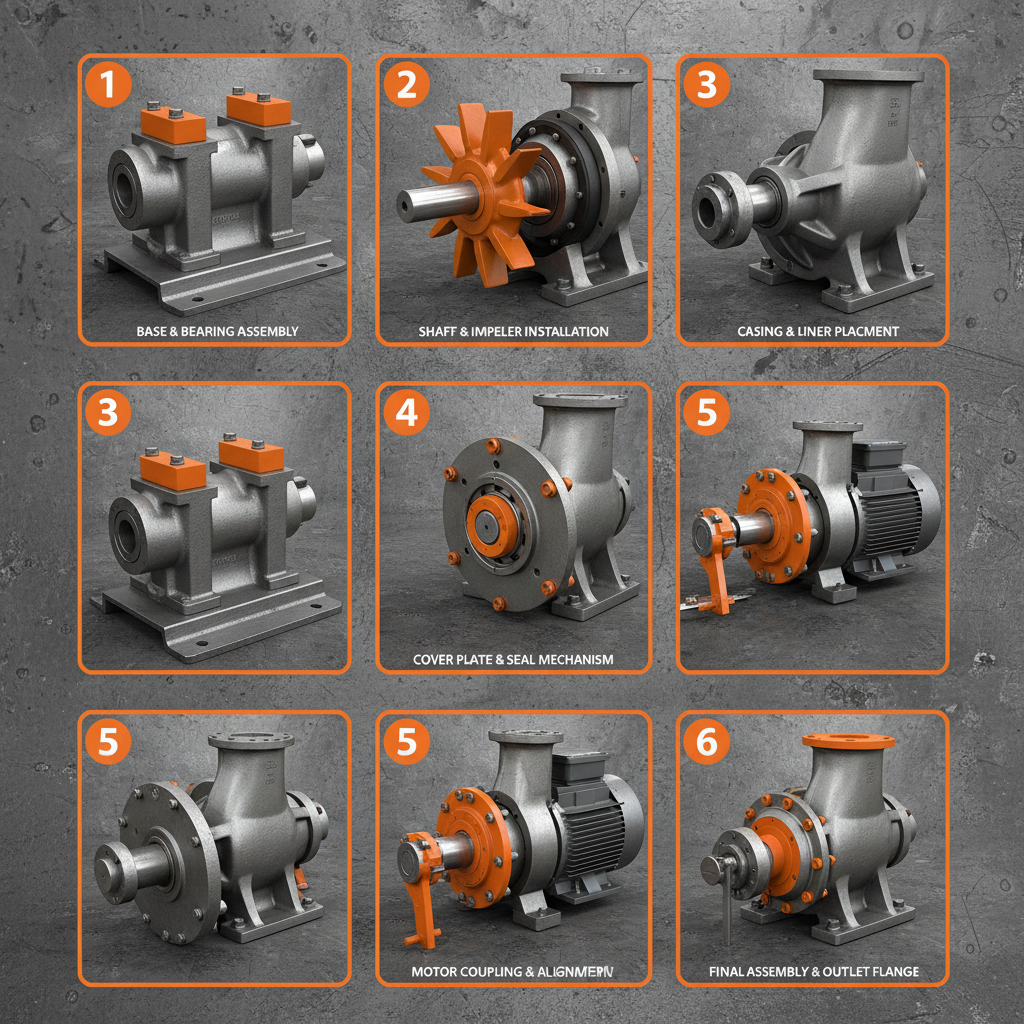
A wholesale slurry pump cover is a critical protective component designed to shield the internal mechanisms of heavy-duty pumps from the abrasive nature of slurry materials. These covers ensure that the pump maintains structural integrity while handling high-density mixtures of solids and liquids, preventing external contaminants from entering the pump housing and protecting the internal seals from premature wear.
In mining, dredging, and industrial waste management, the failure of a pump cover can lead to catastrophic leakage, unplanned downtime, and expensive system overhauls. Procurement teams often struggle to balance the trade-off between initial acquisition costs and the long-term operational lifespan of the component, especially when dealing with highly corrosive chemical slurries or high-velocity abrasive sands.
This technical analysis examines the material specifications, procurement criteria, and performance impacts of high-quality slurry pump covers. By understanding the relationship between metallurgy and operational efficiency, plant managers and engineers can make informed decisions to optimize their pump maintenance cycles and reduce the total cost of ownership.

1Core Functions of Slurry Pump Covers

The primary purpose of a slurry pump cover is to provide a robust seal and structural enclosure for the pump's internals. It acts as the first line of defense against the abrasive forces of the fluid medium, ensuring that the pressure within the pump casing remains stable. Without a properly fitted cover, the risk of slurry leakage increases, which can lead to environmental hazards and accelerated wear on the shaft and bearings.
Furthermore, the cover supports the expeller ring and shaft seal assembly. In many configurations, the cover is not merely a lid but an integral part of the sealing system, working in tandem with the expeller to push slurry away from the shaft, thereby protecting the packing or mechanical seals from direct contact with abrasive particles.
From an operational standpoint, the quality of the cover directly influences the Mean Time Between Failures (MTBF). A high-precision wholesale slurry pump cover reduces vibration and ensures that the internal alignment of the impeller and volute remains constant even under extreme hydraulic loads.
2Material Science: Chrome vs. Stainless Steel
The choice of material for a slurry pump cover is determined by the chemical composition and abrasiveness of the pumped medium. High Chrome alloys (such as A05) are typically preferred for applications involving high-velocity abrasive particles, as they offer superior hardness and resistance to erosive wear, making them ideal for tailings and gravel pumps.
On the other hand, stainless steel options like C23 provide exceptional resistance to pitting and crevice corrosion, which is essential in FGD (Flue Gas Desulfurization) pumps or chemical processing plants. While stainless steel may wear faster in purely abrasive environments, it prevents the material degradation that would cause a chrome cover to crack or flake.
Combining these materials—such as using high chrome for the wear areas and stainless steel for the structural frame—can create a hybrid solution that maximizes both longevity and reliability, depending on the specific requirements of the industrial site.
3Critical Application Scenarios
In dredging operations, pump covers are subjected to varying pressures and a wide range of particle sizes, from fine silts to large pebbles. The cover must be capable of withstanding sudden impact loads without fracturing. In these scenarios, the toughness of the casting is just as important as its hardness to prevent catastrophic failure during deep-sea or riverbed extraction.
Mining tailings management presents a different challenge, where the slurry is often highly acidic or alkaline. Here, the wholesale slurry pump cover must maintain its seal integrity despite constant chemical attack. The interaction between the cover and the expeller seal is crucial to prevent the slurry from migrating into the pump's lubrication system.
Industrial waste treatment plants often utilize these covers in pumps handling sewage or chemical sludge. In these environments, the focus shifts toward preventing leaks that could cause environmental contamination, requiring tighter tolerances and higher-grade gasket materials at the cover interface.
4Performance Metrics and Impact Analysis
Evaluating the performance of a slurry pump cover involves measuring the rate of material loss over a set operational period. High-grade components show a significantly lower erosion rate, which maintains the pump's volumetric efficiency by preventing internal recirculation caused by gaps in the seal.
The chart below illustrates the comparative advantages of using premium wholesale slurry pump covers against standard industry averages. The most notable improvement is seen in the maintenance cycle and overall operational life, as superior metallurgy reduces the frequency of part replacements.
wholesale slurry pump cover Performance Metrics
When a cover maintains its dimensional stability, the pump consumes less energy because the hydraulic flow remains streamlined. Conversely, a worn cover allows fluid to leak back toward the suction side, increasing the workload on the motor and raising electricity costs per cubic meter of slurry moved.
5Procurement and Selection Criteria
When sourcing components in bulk, procurement teams must look beyond the unit price. The "True Cost" of a pump cover includes the cost of installation, the cost of downtime during replacement, and the impact on the overall pump efficiency. Specifying the exact metallurgy—such as A05 High Chrome—is essential to avoid receiving a part that fails prematurely.
Compatibility is another critical factor. A cover must be a perfect match for the pump model, including the bolt pattern and the seating area for the expeller ring. Even a few millimeters of misalignment can cause turbulence, which accelerates the erosion of the cover itself and the surrounding pump housing.
Suppliers like Aier Machinery Hebei Co., Ltd. emphasize the importance of precision casting, as it reduces the need for extensive machining and ensures that the wholesale slurry pump cover integrates seamlessly with the existing pump infrastructure, reducing commissioning time.
6Maintenance Challenges and Limitations
Despite the use of high-performance materials, slurry pump covers have inherent limitations. No material is completely immune to wear; instead, the goal is to slow the degradation. One common challenge is "localized erosion," where specific flow patterns create vortices that wear through the cover faster than expected, regardless of the material's hardness.
Maintenance teams often face difficulties during the replacement process due to the weight of the components and the accumulation of hardened slurry around the bolts. Using specialized removal tools and ensuring proper lubrication of the threads can prevent bolt shearing, which would otherwise extend the downtime significantly.
Furthermore, the compatibility between the cover and the gasket material is often overlooked. If a high-chrome cover is paired with an inappropriate gasket, chemical reactions or thermal expansion differences can lead to premature seal failure, undermining the benefits of the premium cover material.
7Component Comparison for Decision Making
Choosing the right cover requires a side-by-side comparison of available options based on the specific operating environment. Whether the priority is maximum hardness for mining or maximum corrosion resistance for chemical processing, the table below provides a framework for selection.
By analyzing the trade-offs between material types, operators can align their procurement strategy with their actual maintenance goals, moving from a reactive "break-fix" model to a proactive lifecycle management approach.
| Material Type | Primary Strength | Best Use Case | Main Limitation |
|---|---|---|---|
| High Chrome (A05) | Extreme Hardness | Tailings/Gravel | Brittle under impact |
| Stainless Steel (C23) | Corrosion Resistance | FGD/Chemicals | Lower abrasion resistance |
| Rubber Lined | Impact Absorption | Coarse Sand | Temperature limits |
| Ceramic Composite | Ultra-Low Wear | Fine Abrasives | High initial cost |
| Cast Iron | Low Cost | Clean Water/Low Solids | Rapid wear in slurry |
| Hybrid Alloy | Balanced Performance | General Industrial | Complex manufacturing |
Ultimately, the most cost-effective wholesale slurry pump cover is one that matches the fluid's properties. Investing in higher-grade materials like those provided by Aier Machinery can reduce long-term costs by extending the interval between scheduled shutdowns.
Frequently Asked Questions
Conclusion
Selecting the right wholesale slurry pump cover is a critical decision that impacts the operational reliability and cost-efficiency of any slurry-handling system. By prioritizing material compatibility—whether through high-chrome alloys for abrasion or stainless steel for corrosion—and ensuring precise manufacturing tolerances, operators can significantly extend the lifespan of their equipment and reduce unplanned downtime.
For organizations seeking to optimize their pump performance and procurement strategy, reviewing detailed technical specifications is the first step toward better system stability. Professionals evaluating suitable solutions can review the available product information and customization options at www.aierpumps.com.